Google I/O 2026: Continued Transition to AI
A reflection on the words and tone Google used at I/O 2026 to present AI as a creative tool.
I recently wrote about how words are powerful. Today I took the time to watch part of the Google I/O 2026 event, which was primarily promoting AI, and Google's words were finely tuned to that end.
Part of that promotion is helping people feel at ease with AI and alleviating their concerns.
When people think about using AI, one of the main concerns is the loss of human expression and touch. So, during Google's event, the company pressed against the dehumanization that creatives have been pushing back against. Google's presenters had key phrases sprinkled into their talks, like "At its best, technology is a canvas for human creativity" around the 1:24:00 mark. Note they say "technology" and not "AI" in a packed and subtle phrase.
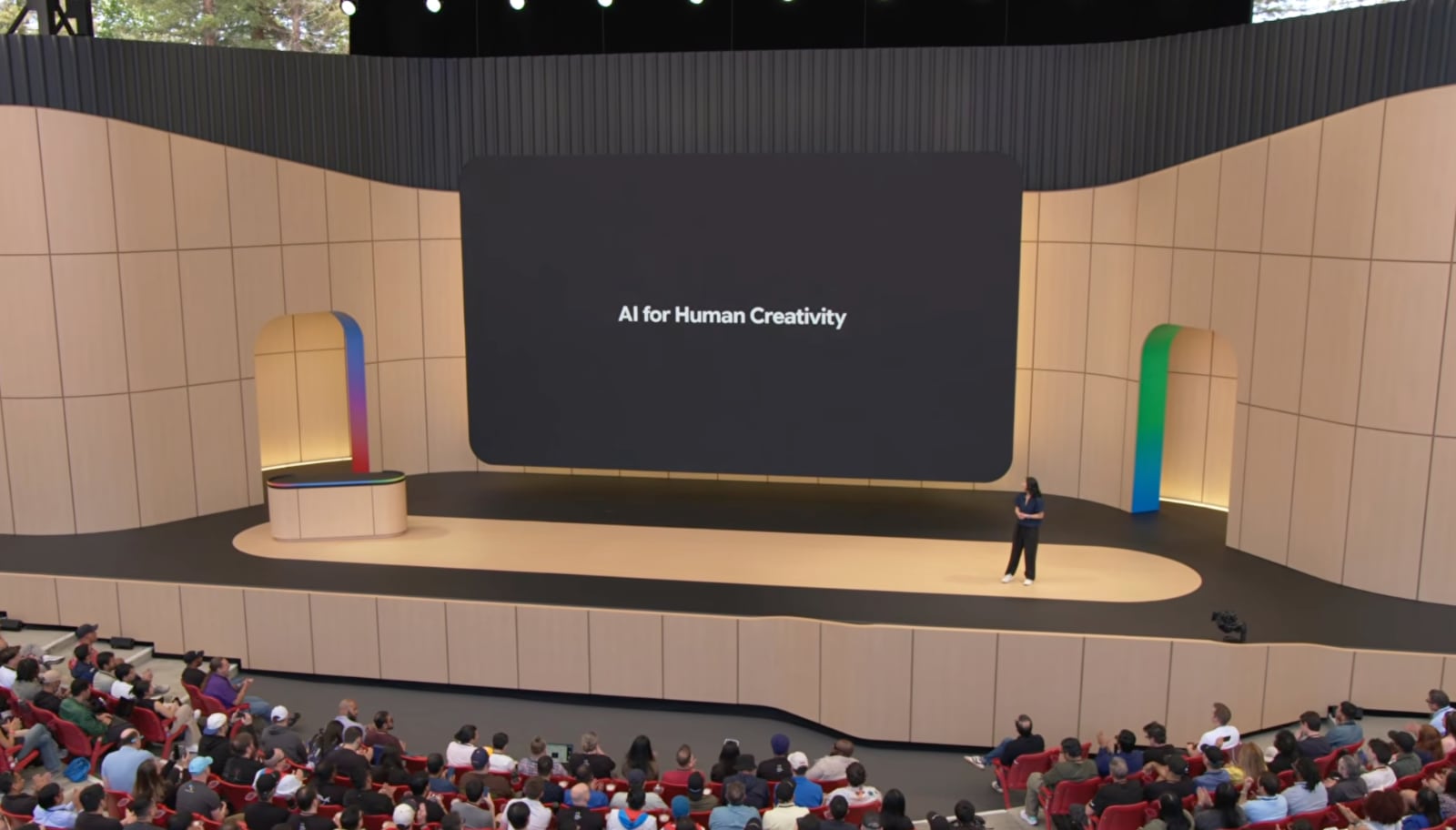
Google's marketing words and tone here are important to catch. Those words and that tone could signal a few things. It could mean Google is aware of the concerns of creatives and the way AI is destabilizing their way of life. It could mean Google feels the need to be subtle in how it addresses those concerns. That is, Google is not direct about the concern because it wants to avoid the elephant in the room. Instead, it acts as though the concern is not with the technology, but with those who do not "see" what Google sees: a tool instead of a creative replacement.
The tone felt forceful, with a bit of a buzz about empowerment.
"Our products and models are unlocking new breakthroughs. But the real breakthrough isn't the technology, it's what you do with it."
The message was pressing creatives to get on board with AI. It was pushing creatives to "shrink the gap" from idea to realization and move at the speed of "thought."
For creative tasks, the tone was that AI is an artistic tool rather than the thing generating the work. It is an undertone sprinkled into the talk. It is clearly not honest about the truth of how people are feeling, but it is Google's approach, a subtle one, to get people to trust AI more for producing creative work.
My takeaway was that Google, and the rest, are not really concerned with the potential loss of human expression and touch. They are pressing the idea that AI is not replacing human work but expanding its bounds.
Their words and tone seem to be communicating this to anyone who is creative: start moving faster and start adapting to AI generative tools.